Expenses Category
Expense Categories Management
Expense Categories help organize and classify business expenses for better financial tracking, reporting, and analysis. Proper categorization ensures accurate accounting and simplifies expense monitoring.
1. Overview of Expense Categories
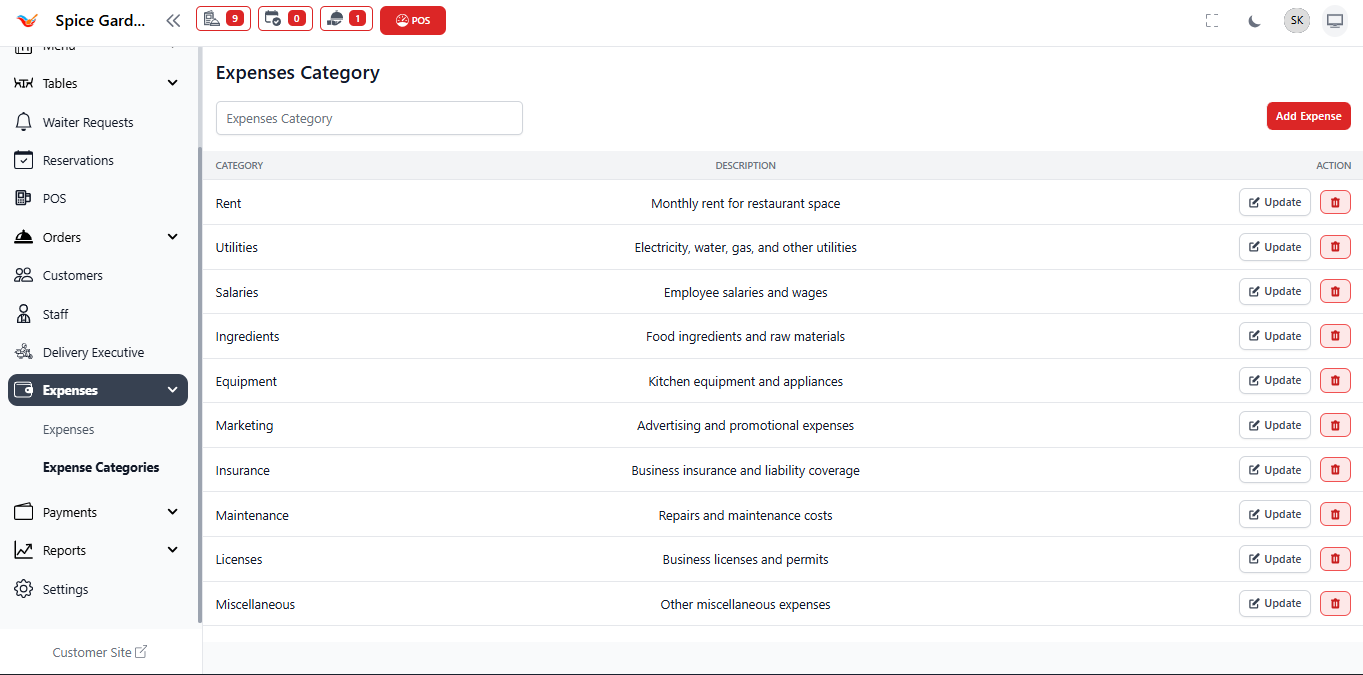
The Expense Categories page displays all predefined expense classifications used when adding expenses. Each category groups similar types of operational costs.
- Category Name – Title of the expense classification.
- Description – Explains what type of expenses fall under this category.
- Update – Modify category details.
- Delete – Remove unused categories.
Categories help generate cleaner financial reports and better cost breakdown analysis.
2. Common Expense Categories
Typical restaurant expense categories include:
- Rent – Monthly rental payments.
- Utilities – Electricity, water, gas, internet bills.
- Salaries – Staff wages and payroll expenses.
- Ingredients – Raw materials and food purchases.
- Equipment – Kitchen appliances and machinery.
- Marketing – Advertising and promotions.
- Insurance – Business insurance costs.
- Maintenance – Repairs and servicing expenses.
- Licenses – Government permits and legal fees.
- Miscellaneous – Other uncategorized expenses.
3. Adding a New Expense Category
- Navigate to Expenses → Expense Categories.
- Enter the category name in the input field.
- Click Add Expense (or Save).
- The new category will now be available when adding expenses.
Create categories before recording expenses to maintain clean financial records.
4. Updating or Deleting Categories
- Update: Edit category name or description if required.
- Delete: Remove a category that is no longer used.
⚠️ Deleting a category may affect existing expense records if they are linked to it.
Why Expense Categories are Important
- Improves financial reporting accuracy.
- Helps analyze spending trends.
- Supports profit and loss calculations.
- Enables structured accounting.
- Provides better audit readiness.